

Best Natural Supplements for Liver Health in 2026
Table of Contents
- How to Choose the Best Natural Supplements for Liver Health
- Milk Thistle and Silymarin: The Most Studied Liver Support Supplements
- Vitamins for Liver Health: E, C, D, and B-Complex
- Supplements for Fatty Liver Disease: What the Evidence Shows
- Liver Detox Supplements: Separating Evidence from Marketing
- Safety, Interactions, and Who Should Avoid Liver Supplements
- Conclusion: Building a Realistic Liver Health Plan
- Frequently Asked Questions
Last Updated: October 7, 2026
How to Choose the Best Natural Supplements for Liver Health
Finding the best natural supplements for liver health comes down to three things: standardized ingredients, third-party testing, and a formula that matches your goal.
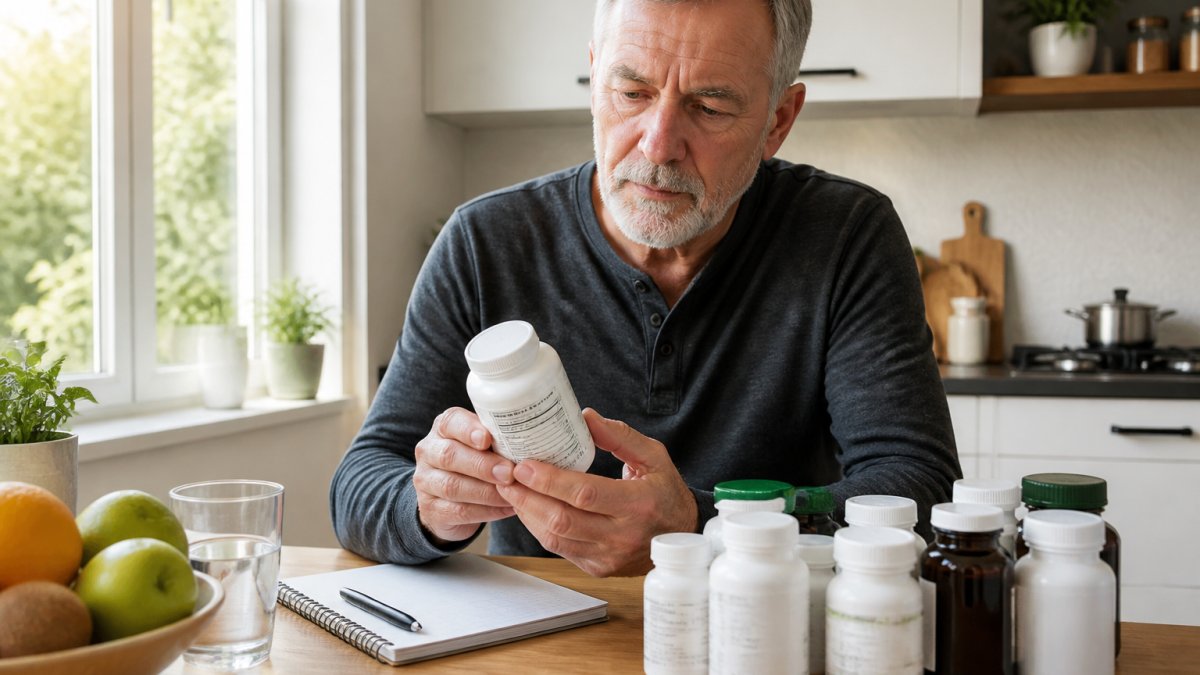
Your liver handles over 500 functions, from filtering blood to managing fat metabolism.
A handful of ingredients have real research behind them, several have limited data, and a large group have almost nothing. Below, we grade each one.
Quick Comparison: Top Liver Support Supplements
| Supplement | Key Ingredients | Best For | Evidence Grade |
|---|---|---|---|
| Maximum Milk Thistle | Silybin Phytosome | General liver protection | Strong |
| UltraThistle | Silybin Phytosome, phosphatidylcholine | Highest-potency milk thistle support | Strong |
| Milk Thistle with Artichoke & Turmeric | Milk thistle, turmeric, artichoke | Daily antioxidant support | Moderate |
| Clinical LiverSupport | 12 ingredients, 8 antioxidants | Comprehensive, physician-formulated support | Moderate |
| Liver Support & Detox | Milk thistle, NAC, selenium, choline | Detox pathway support | Moderate |
| NAC Plus | NAC, selenium, molybdenum | Glutathione production | Moderate |
| Selenium | SelenoExcell | Antioxidant enzyme support | Moderate |
| LiverCare | 7 Ayurvedic herbs | Traditional herbal support | Limited |
What to Look For (and What to Ignore) on a Label
First, check standardization. A bottle that says "milk thistle 500 mg" tells you nothing about how much silymarin, the active compound, you actually get.

Second, look for third-party testing. The FDA's dietary supplement guidance explains that supplements are regulated as food, not drugs, which means the manufacturer carries most of the responsibility for quality.
Third, ignore proprietary blends with no amounts listed. If a formula hides its doses behind a trademarked blend name, you cannot judge whether it works.
Milk Thistle and Silymarin: The Most Studied Liver Support Supplements
Milk thistle is the most researched plant in liver health, and silymarin is the compound responsible for most of its activity.
The catch is absorption: standard milk thistle extract is poorly absorbed, so much of what you swallow never reaches your bloodstream. Natural Wellness uses this in Maximum Milk Thistle and UltraThistle.

For most people starting out, Maximum Milk Thistle is our pick, the core benefit without an overcomplicated formula.
If you want milk thistle alongside other traditional liver ingredients, Milk Thistle with Artichoke & Turmeric combines three standardized extracts in one capsule.
Vitamins for Liver Health: E, C, D, and B-Complex
Vitamins for liver health matter most when you are deficient, and less when levels are adequate, a distinction most marketing ignores.
- Vitamin E acts as a fat-soluble antioxidant. It has been studied in fatty liver, though results vary and high doses carry their own risks.
- Vitamin C supports antioxidant recycling and helps regenerate other antioxidants in the body.
- Vitamin D is commonly low in people with chronic liver conditions, so testing matters more than guessing.
Our take: a broad multivitamin covers most of this. You do not need a separate bottle for each letter. The exception is vitamin D, where a blood test tells you whether you need more.
Supplements for Fatty Liver Disease: What the Evidence Shows
Fatty liver disease, now often called metabolic dysfunction-associated steatotic liver disease (MASLD), is what most people buying liver supplements are trying to address, and where the gap between marketing and evidence is widest. No capsule replaces weight loss, dietary change, and movement, but some ingredients have measurable effects.
What studies actually measure
When researchers test a liver supplement, they rarely measure "liver health" directly. They measure proxies:
- Liver enzymes, ALT and AST. These can fall for many reasons, including normal fluctuation, and a drop does not prove the liver is healthier.
- Liver fat, usually via MRI-PDFF or transient elastography (FibroScan). This is a more direct measure, but access is limited outside trials.
- Inflammation and fibrosis markers, often from blood tests or, in trials, biopsy. These matter most for long-term risk.
A supplement that lowers ALT in a small, short trial has not been shown to reverse fatty liver, the key distinction to understand before spending money.
Ingredient-by-ingredient evidence grade for fatty liver
Here is how the human evidence stacks up, separated from animal and lab data:
| Ingredient | Human evidence for fatty liver | What it actually showed | Grade |
|---|---|---|---|
| Vitamin E | Multiple randomized trials, including the PIVENS trial in non-diabetic adults with biopsy-proven NASH | Improved some histology markers at 800 IU/day, but not fibrosis; long-term safety concerns at high doses | Moderate, with caveats |
| Omega-3 fatty acids | Several randomized trials | Modest reductions in liver fat on imaging; inconsistent effects on enzymes and histology | Moderate for liver fat, limited for disease outcomes |
| Milk thistle / silymarin | Many trials, mostly small and short | Mixed results on enzymes; little consistent effect on fat or fibrosis | Limited to moderate |
| Curcumin | Small randomized trials | Some reductions in liver fat and enzymes; short duration, small samples | Limited |
| Choline | Observational and small intervention data | Supports fat transport out of the liver; deficiency worsens fat accumulation, but supplementing when replete is unproven | Limited for treatment |
| Probiotics | Small trials, varied strains | Some improvements in enzymes and inflammatory markers; strain-specific and not standardized | Limited |
| Reishi and other mushrooms | Mostly animal and lab data | Antioxidant and anti-inflammatory signals; human liver outcomes largely untested | Insufficient |
Two patterns stand out: the ingredients with the strongest human data, vitamin E and omega-3s, still do not reliably reverse fibrosis, and the loudest-marketed ingredients often have the thinnest evidence.

The outcomes that actually matter
If you are tracking your own progress, focus on what a clinician can measure:
- ALT and AST, useful for monitoring, not for diagnosis.
- Liver fat on imaging, the most accessible direct measure if your clinician orders it.
- Fibrosis assessment, via elastography or a fibrosis blood panel; this is the outcome that predicts long-term risk. (Source: National Institutes of Health (NIH) overview of milk thistle)
A supplement that improves one number while weight, A1C, and fibrosis markers stay flat has not changed your trajectory.
A practical way to test whether a supplement is helping
If you and your clinician decide to try a supplement, treat it like a short experiment, not a permanent addition:
- Get baseline labs, at minimum ALT, AST, and a fibrosis assessment if indicated.
- Set a review date, typically 3 to 6 months out.
- Change one thing at a time so you can attribute any change.
- Re-test the same markers.
- Stop if there is no measurable benefit or if side effects appear.
This protects you from the most common trap in liver supplements: taking something for years because it feels healthy, without checking whether it changed anything measurable.
Liver Detox Supplements: Separating Evidence from Marketing
Liver detox supplements usually oversell what the liver does on its own. Your liver already runs a two-phase detoxification system, converting toxins into compounds the body can excrete. A supplement's goal is to supply the nutrients those pathways need, not to "flush" anything.
This is the distinction we draw at Natural Wellness: support the pathways, do not promise a cleanse. Liver Support & Detox combines milk thistle, NAC, selenium, choline, and alpha-lipoic acid, all tied to normal detoxification processes. NAC Plus focuses on glutathione, the body's master antioxidant, which the liver relies on heavily. Selenium supports glutathione peroxidase, an enzyme that neutralizes damaging peroxide radicals.
LiverCare takes a different route, using seven Ayurvedic herbs traditionally used for liver and digestive support. It is a reasonable option if you prefer a plant-based, vegan formula.
Safety, Interactions, and Who Should Avoid Liver Supplements
Most liver supplement articles end by telling you to "consult your doctor." More useful is knowing which ingredients have documented interaction risks, which conditions make supplements a bad idea, and which symptoms mean you should stop self-treating and get evaluated.
Ingredient-specific interaction cautions
These are the interactions most commonly flagged in clinical literature and pharmacy references. This is not a complete list, and it is not a substitute for a pharmacist review of your full medication list.
- Milk thistle / silymarin, May affect CYP2C9 and other liver enzymes. Case reports and small studies suggest possible changes in levels of some drugs, including certain diabetes medications and warfarin. The effect is usually modest but unpredictable.
- Selenium, Interacts with statins and some chemotherapy agents. High doses over time carry a risk of selenosis, so stay within labeled amounts.
- Green tea extract (high-dose, concentrated), Linked to rare but serious liver injury, especially in concentrated supplement form rather than brewed tea (Green tea extract-associated acute liver injury: Case report and review).
Who should avoid liver supplements entirely
Some groups should not experiment with liver supplements at all without specialist guidance:
- Pregnant or breastfeeding women, Most liver herbs have not been tested for safety in pregnancy, and some have hormonal or uterine effects.
- People with diagnosed liver disease, Including cirrhosis, autoimmune hepatitis, viral hepatitis, and MASLD with fibrosis. Supplements can mask progression and interact with treatment.
- Anyone with abnormal liver tests, Elevated ALT, AST, or bilirubin needs a diagnosis, not a supplement. Some supplements can worsen the underlying cause.
Symptoms that mean stop and seek care
Do not use a liver supplement to delay evaluation of any of the following:
- Yellowing of the eyes or skin (jaundice)
- Dark urine or pale stools
- Persistent right-upper-abdominal pain
These can indicate liver injury or advanced disease. They warrant prompt medical evaluation, not a supplement adjustment.
How to monitor yourself if you do take a liver supplement
If you and your clinician decide a supplement is reasonable, build in monitoring rather than taking it indefinitely:
- Baseline labs, ALT, AST, bilirubin, and a fibrosis assessment if indicated.
- A defined trial period, typically 3 to 6 months.
- Repeat labs at the end, compare against baseline, not against how you feel.
- One change at a time, so you can attribute any effect.
- Stop if no measurable benefit, or if any new symptom appears.
The bottom line on safety
Liver supplements are not inherently dangerous, but they are not risk-free either. The people most likely to reach for them, those with existing liver conditions or on multiple medications, are also the most likely to be harmed by an interaction or a delayed diagnosis. A five-minute conversation with a pharmacist or clinician is the highest-value step in this article.
Conclusion: Building a Realistic Liver Health Plan
The hardest part of liver health is patience. Damage builds over years, and support works the same way, gradually and without dramatic feedback. That is why we built our formulas around evidence rather than hype.
Natural Wellness has focused on liver and kidney support since 1996. Every product is manufactured in an FDA-registered facility under strict cGMP regulations, and our formulas use standardized, research-backed ingredients like Silybin Phytosome and SelenoExcell.
Frequently Asked Questions
What are the best natural supplements for liver health?
The most researched options include milk thistle (silymarin), NAC, selenium, and vitamins E, C, and D. Milk thistle is the most studied, with silymarin shown to support liver cell protection. NAC supports glutathione production, a key antioxidant for liver detoxification. Selenium supports glutathione peroxidase activity. For fatty liver, choline and curcumin have evidence. Quality matters: look for cGMP manufacturing and standardized extracts so you know the dose is consistent.
Can supplements cause liver damage?
Yes. Some herbal supplements, including certain green tea extracts, kava, and high-dose vitamin A, have been linked to liver injury. The risk rises with high doses, poor-quality products, or combining multiple supplements. This is why label transparency and cGMP certification matter. If you have existing liver disease or take prescription medications, talk to your doctor before starting any supplement, including milk thistle or NAC.
How can you tell whether a liver supplement is safe?
Check three things: manufacturing standards (cGMP, FDA-registered facility), third-party testing for purity and potency, and a clear ingredient list with standardized extracts. Avoid products with proprietary blends that hide individual doses. If a label claims to 'cure' liver disease or 'detoxify' your body without evidence, treat it with caution. A safe supplement lists exact amounts and does not promise medical outcomes.
Should you talk to a doctor before taking liver supplements?
Yes, especially if you take prescription medications, have diagnosed liver or kidney disease, or are managing a chronic condition. Some supplements interact with drugs: milk thistle may affect how the liver processes certain medications, and NAC can interact with nitroglycerin. Your doctor can check for interactions and monitor liver enzymes if needed. Bring the actual supplement bottle so they can review the full ingredient list.
Which supplements may help support people with fatty liver disease?
Research points to several options: milk thistle (silymarin) for cell protection, curcumin for its anti-inflammatory properties, choline for fat metabolism, and omega-3 fatty acids for reducing liver fat. Vitamin E has been studied in nonalcoholic fatty liver disease, though high doses carry risks. No supplement replaces weight management, diet changes, and exercise, which remain the most effective strategies for fatty liver.
Liver health rarely announces itself, which makes the quiet, consistent choices matter most. Natural Wellness offers science-backed formulas built on standardized ingredients, manufactured in an FDA-registered facility under strict cGMP standards, and trusted by healthcare professionals. Get started with Natural Wellness and give your liver the daily support it has been waiting for.